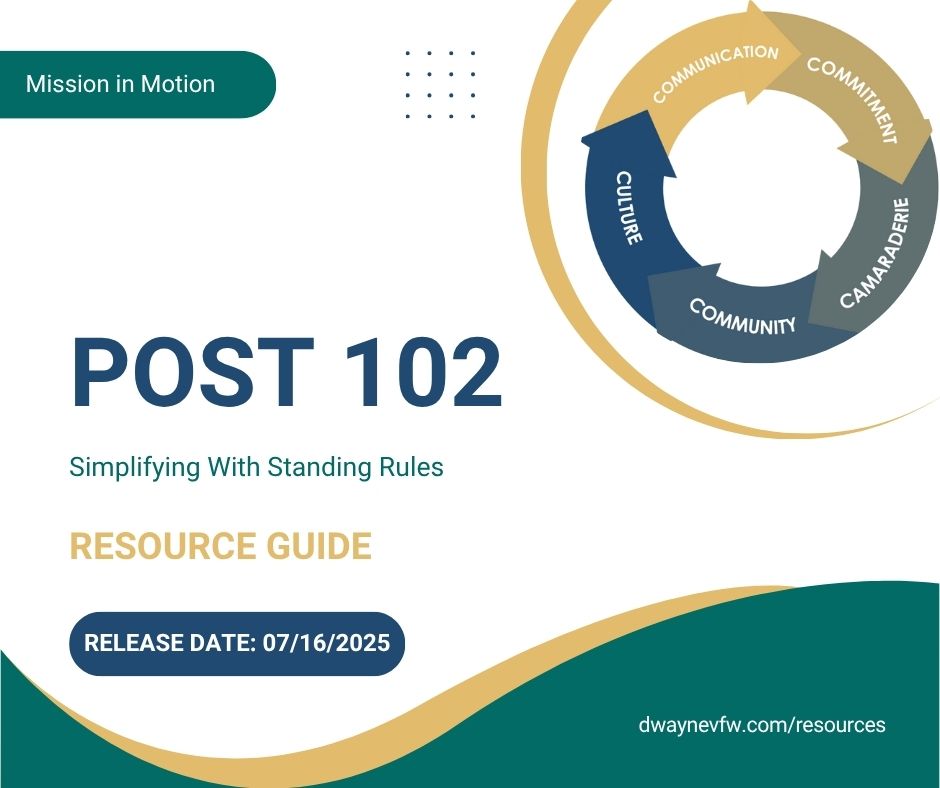
Communication is a foundational part of a successful Post. Effective communication is much more than just sharing information. Instead, communication is about ensuring clarity, preserving tradition, and fostering ultimate trust. In the Veterans of Foreign Wars (VFW), formal communication methods play a critical role in maintaining organizational integrity, honoring our fraternal customs, and executing the all-important official responsibilities with professionalism. Using and mastering formal standardized communication methodologies equips members and leaders to ensure the success and integrity of the VFW Post.
Why Formal VFW Communication Matters
Formal VFW communication methods are not merely ceremonial; instead, they serve as an essential tool to:
- Ensure transparency and accountability in leadership decisions
- Preserve institutional knowledge and legacy
- Support uniformity across Posts, Districts, and Departments
- Convey respect and professionalism, especially in external partnerships
Whether addressing fellow your comrades, reaching out to supportive community partners, or reporting to Department and National leadership, the tone, format, and clarity of your message matter.
Types of Formal VFW Communication
When it comes to communication within the VFW, there are three main types that you should consider as a VFW leader – written correspondence, electronic communication, and public communication.
Written Correspondence
As a VFW leader, you will commonly find yourself needing to draft letters, meeting minutes, and official reports.
- Letters: These are typically used for formal requests, official updates, or conveying decisions. A formal letter from a Post Commander to the Department, for example, may request assistance, provide a report, or recommend a member for recognition. These documents should follow a structured format – header, date, subject line, salutation, body, closing, and signature block. When providing formal correspondence, it is recommended to reference the latest version of the VFW Style Guide (log into your VFW account and navigate to the Communications & Public Affairs page under VFW Training & Support).
- Meeting Minutes: Capturing accurate minutes during Post, District, and committee meetings ensures that all actions, motions, and decisions are officially recorded. Remember that these are critical as the minutes are to be reported out to the membership, audited by the Trustees, and inspected by the Department, often via the District Inspector. These minutes serve as the historical record and must reflect facts, not opinions, with clarity and accuracy. Today’s technological advancements enable us to do this more accurately and conveniently than ever before, but remember that it is the job of the Adjutant to maintain these.
- Official Reports: Quartermaster and Adjutant reports, inspection documents, and committee reports are all part of the VFW’s communication backbone. Timely submission, proper formatting, and attention to detail are essential.
Electronic Communication
Technology is here, and it is ever advancing. Don’t be afraid of it; use it to your Post’s advantage. Common forms of electronic communication include but are not limited to email and digital documents or forms.
- Email: Although it is less formal than a printed letter and becoming more common than in past decades, email communication in the VFW must still be professional. Subject lines should be clear, salutations respectful, and the tone consistent with organizational values. Always proofread and avoid overly casual language.
- Digital Documents and Forms: From Google Forms and Jotform to Docusign and PDF uploads for reporting purposes, digital communication must be accurate, easy to access, and archived properly.
Public Communications
When speaking under the hat of the VFW in a public setting, know that your audience will view your words and actions as coming from and on behalf of the VFW. It is important to understand who should be speaking on behalf of the Post and that the message MUST be in alignment with the organization. Remember that the VFW is a MEMBER-RUN organization. Ultimately, the Commander-in-Chief of the VFW speaks on behalf of all comrades of the organization. At the Department level, its Commander ultimately speaks on behalf of the Commander-in-Chief. At the grassroots level, the Post Commander is the face of the Post, but that does not mean that any one individual can just make up a position on the fly. When it comes to public communications, the two most prevalent formats are press releases and official speeches.
- Press Releases & Media Alerts: When promoting events or responding to media inquiries, Posts should use a media alert to announce an upcoming event. On the other hand, if the Post wants to share recent events, awards, or announcements, it should consider using a press release. Templates for media alerts and press releases can be found on the Communications & Public Affairs page on vfw.org.
- Official Speeches and Remarks: When delivering a speech on behalf of the VFW, it should be vetted for content, tone, and alignment with organizational values and goals. Brevity, structure, and emotional resonance are key. The National organization provides some initial guidance and examples for those looking to make patriotic holiday speeches
The Role of Protocol and Chain of Command
In formal VFW communication, it is crucial to honor the chain of command. When sending correspondence regarding Post business to the Department, be sure to know who the primary point of contact is for the matter you are communicating about. Ask yourself these questions:
- Is this matter best handled by the Department?
- If it is a matter of concern at the Post, has the Post Commander or the District Commander been notified and given the chance to resolve the matter first?
- If the Department is the appropriate recipient, who is the ultimate Point of Contact (or subject matter expert) for the question or topic at hand?
When corresponding directly with the Department, general topics are to be communicated the to official corresponding officer of the Department, the Adjutant. Of course, the Adjutant has a full plate; if the matter surrounds a specific program (i.e. Voice of Democracy, MAP, benefits question, or legislative issue), you should likely reach out to the respective District or Department chairperson responsible for that program. For comrades in good standing within VFW Department of Georgia, reference the Commander’s Book, Officers and Committees documents, General Orders, or the Members Only website. When in doubt, reference the Guide to Protocol found within the VFW Training & Support section of the vfw.org website and rely on the knowledge and experience of Department leadership.
Best Practices for VFW Formal Communication
Even the best tactics can be improved. With over 125 years of legacy, seasoned VFW leaders have a wealth of knowledge and experience. Based on the mentorship of many great leaders, here are some best practices to consider:
- Use Templates: Whenever possible, use Department- or National-approved templates for consistency.
- Proofread Carefully: Spelling, grammar, and tone all reflect on the Post’s professionalism.
- Be Timely: Respect deadlines and schedules for submitting reports and correspondence.
- Archive and Document: Maintain copies of all formal communications, whether digital or physical.
- Stay Respectful: Even during disagreement or criticism, maintain a tone of respect and commitment to the mission.
Moving the Mission Through Communication
By respecting the protocols that define our heritage and mastering the formats that guide our work, we ensure our voice is not only heard but respected. Whether you’re an incoming Adjutant, a rising Post Commander, or a District Officer, the ability to communicate formally and effectively is essential in moving the mission forward -honorably, professionally, and with purpose.